



Skip to content
Apex Professional University
  • Know us
    • About Us
    • Administration
      • Founder & Chancellor
      • Vice Chancellor
      • University Officers
      • Board of Governors
      • Board of Management
      • Academic Senate
      • Board of Studies
      • Finance Committee
      • Ombudsperson
    • Act & Statute
    • Institutional Development Plan
    • Recognition & Approval
    • Accreditation & Ranking
    • Annual Report
    • Annual Accounts
    • Sponsoring Body
  • Academics

      Academic Programs

      • Certificate & Diploma
      • Bachelor Degree
      • Master Degree
      • Ph.D. Program
      • Post Doctoral Fellowship
      • Apprenticeship Embedded Degrees
      • External (Private) Degree

      Faculty

      • Faculty of Education and Liberal Studies
      • Faculty of Law and Forensic Sciences
      • Faculty of Pharmaceutical and Biomedical Science
      • Faculty of Nursing & Patient Care
      • Faculty of Naturopathy & Yogic Science
      • Faculty of Management & Technology
      • Centre for Indian Knowledge System
      • Centre for Vocational Education
      • Institute of Research & Innovations
      • Directorate of Outreach
      • Apex Institute of Medical Sciences & Hospital

      Useful Links

      • Academic Calendar
      • Academic Regulations
      • Academic Leadership
      • Examination Rules
      • Faculty Profile
      • IQAC
      • Library
      • Academic Collaborations
  • Admission
    • Prospectus
    • Why Study at APU
    • Admission Process
    • Scholarship Scheme
    • Fee Refund Policy
    • Admission Offices
    • Pay Your Fees
    • International Students
    • Apply Now
    • Fee Structure
  • Research
    • R & D Cell
      • Saturday Exchange: Ideas & Innovation
    • Incubation & Entrepreneurship Centre
    • Research Facilities
    • List of Guide
    • List of Scholars
    • Our Journals
      • BKS Journal
    • Research Centres
  • Student Life
    • Campus Life
    • NCC
    • Sports Facilities
    • Hostel Facilities
    • Health Facilities
    • Placement Cell
    • Student Grievance Cell
    • Internal Complaints Committee
    • Anti-Ragging Cell
    • Equal Opportunity Cell
    • Facilities for Differently-abled
    • Alumni Association
    • SEDG Cell
    • UGC e-Samadhan Portal
  • Resources
    • E-Content
    • Right To Information (RTI)
    • Circulars & Notices
    • Announcements
    • Newsletters
    • News & Events
    • Job Openings
    • Study in India
    • Admission Procedure
    • Photo Gallery
    • Telephone Directory
Apply Now
Apex Professional University
  • Know us
    • About Us
    • Administration
      • Founder & Chancellor
      • Vice Chancellor
      • University Officers
      • Board of Governors
      • Board of Management
      • Academic Senate
      • Board of Studies
      • Finance Committee
      • Ombudsperson
    • Act & Statute
    • Institutional Development Plan
    • Recognition & Approval
    • Accreditation & Ranking
    • Annual Report
    • Annual Accounts
    • Sponsoring Body
  • Academics

      Academic Programs

      • Certificate & Diploma
      • Bachelor Degree
      • Master Degree
      • Ph.D. Program
      • Post Doctoral Fellowship
      • Apprenticeship Embedded Degrees
      • External (Private) Degree

      Faculty

      • Faculty of Education and Liberal Studies
      • Faculty of Law and Forensic Sciences
      • Faculty of Pharmaceutical and Biomedical Science
      • Faculty of Nursing & Patient Care
      • Faculty of Naturopathy & Yogic Science
      • Faculty of Management & Technology
      • Centre for Indian Knowledge System
      • Centre for Vocational Education
      • Institute of Research & Innovations
      • Directorate of Outreach
      • Apex Institute of Medical Sciences & Hospital

      Useful Links

      • Academic Calendar
      • Academic Regulations
      • Academic Leadership
      • Examination Rules
      • Faculty Profile
      • IQAC
      • Library
      • Academic Collaborations
  • Admission
    • Prospectus
    • Why Study at APU
    • Admission Process
    • Scholarship Scheme
    • Fee Refund Policy
    • Admission Offices
    • Pay Your Fees
    • International Students
    • Apply Now
    • Fee Structure
  • Research
    • R & D Cell
      • Saturday Exchange: Ideas & Innovation
    • Incubation & Entrepreneurship Centre
    • Research Facilities
    • List of Guide
    • List of Scholars
    • Our Journals
      • BKS Journal
    • Research Centres
  • Student Life
    • Campus Life
    • NCC
    • Sports Facilities
    • Hostel Facilities
    • Health Facilities
    • Placement Cell
    • Student Grievance Cell
    • Internal Complaints Committee
    • Anti-Ragging Cell
    • Equal Opportunity Cell
    • Facilities for Differently-abled
    • Alumni Association
    • SEDG Cell
    • UGC e-Samadhan Portal
  • Resources
    • E-Content
    • Right To Information (RTI)
    • Circulars & Notices
    • Announcements
    • Newsletters
    • News & Events
    • Job Openings
    • Study in India
    • Admission Procedure
    • Photo Gallery
    • Telephone Directory

Best Colleges for a Masters in Psychology in India: How to Choose the Right One in 2026

  • Home
  • Achievements
  • Best Colleges for a Masters in Psychology in India: How to Choose the Right One in 2026
Breadcrumb Abstract Shape
Achievements

Best Colleges for a Masters in Psychology in India: How to Choose the Right One in 2026

  • June 18, 2026
  • Com 0

The best colleges for a Masters in Psychology in India are the ones that combine a UGC-recognised degree, faculty who actively practise or research, and a specialisation that matches the career you want — clinical, counselling, organisational, or applied. Before the college name, though, two choices decide everything: MA versus M.Sc, and whether your goal needs RCI licensing. Get those right and the shortlist almost writes itself.

This guide walks you through both, explains the main specialisations in plain language, and shows where a programme like the one at Apex Professional University fits — including a strength most colleges simply don’t have.

Table of Contents

Toggle
  • First, the choice that trips everyone up: MA or M.Sc Psychology?
  • The RCI question — read this before you enrol anywhere
  • The main specialisations, in plain language
  • What makes a psychology college genuinely good
  • Psychology at Apex Professional University — and its unusual edge
  • Frequently Asked Questions (FAQ)
        • Which is better for a career, MA or M.Sc Psychology?
        • Can I become a clinical psychologist with an MA or M.Sc in Psychology?
        • What can I do after a Masters in Psychology?
        • What is the eligibility for a Masters in Psychology?
        • Does Apex Professional University offer Indian psychology?

First, the choice that trips everyone up: MA or M.Sc Psychology?

Students lose weeks over this, and it is simpler than it looks. Both are two-year master’s degrees. The difference is emphasis, not prestige — one is not automatically ‘higher’ than the other.


MA Psychology

M.Sc Psychology

Leans towards

Theory, social, counselling, applied

Scientific, experimental, statistical, clinical

Typical faculties

Arts / Humanities

Science

Common next steps

Counselling, HR, research, teaching

Clinical/research routes, further specialisation

Eligibility

Bachelor’s (often any stream, psychology preferred)

Bachelor’s (psychology or science background preferred)

The honest rule of thumb: if you lean towards people, society and applied practice, MA suits you; if you lean towards research, data and the clinical-scientific track, M.Sc suits you. What matters far more than the two letters is the specialisation and whether your career needs a licence — which brings us to the part nobody explains clearly.

The RCI question — read this before you enrol anywhere

If your goal is to become a licensed Clinical Psychologist, a regular master’s degree alone is not enough. Clinical psychology practice in India is regulated by the Rehabilitation Council of India (RCI), and the recognised professional route runs through an RCI-approved qualification (historically the M.Phil in Clinical Psychology, now transitioning under newer norms). A general MA or M.Sc in Psychology is a strong, valuable degree — but it is not, on its own, an RCI licence to practise clinically.

Why does this matter so much? Because plenty of students finish a master’s expecting to set up as a ‘clinical psychologist’ and only then discover the licensing gap. There is nothing wrong with a general master’s — it opens counselling, organisational, research, academic and applied careers. But if clinical practice is your specific aim, plan the RCI-approved route from the start.

The main specialisations, in plain language

‘Psychology’ is an umbrella. Where you actually end up depends on the branch you specialise in. The main ones:

  • Clinical psychology — assessing and treating mental-health conditions (RCI-regulated, as above).
  • Counselling psychology — supporting people through life challenges, relationships and stress; strong demand in schools, colleges and wellness settings.
  • Organisational / industrial psychology — human behaviour at work; feeds into HR, talent, L&D and consulting.
  • Applied psychology — a practical, cross-cutting stream applying psychology to real settings: education, health, community, sport.
  • Research & academic psychology — the path to a PhD, teaching and research.

What makes a psychology college genuinely good

Once you know your branch, judge colleges on things that actually shape your training and employability:

  • UGC recognition of the university — non-negotiable, and easy to verify.
  • Faculty who practise or research, not only lecture — and low enough student-to-faculty ratios to get supervision.
  • Practical training: counselling-skills labs, supervised placements, internships, real case exposure.
  • The specialisations offered — make sure your branch is actually taught in depth, not as a single elective.
  • For clinical aspirants: a clear, RCI-aligned progression rather than vague promises.

Psychology at Apex Professional University — and its unusual edge

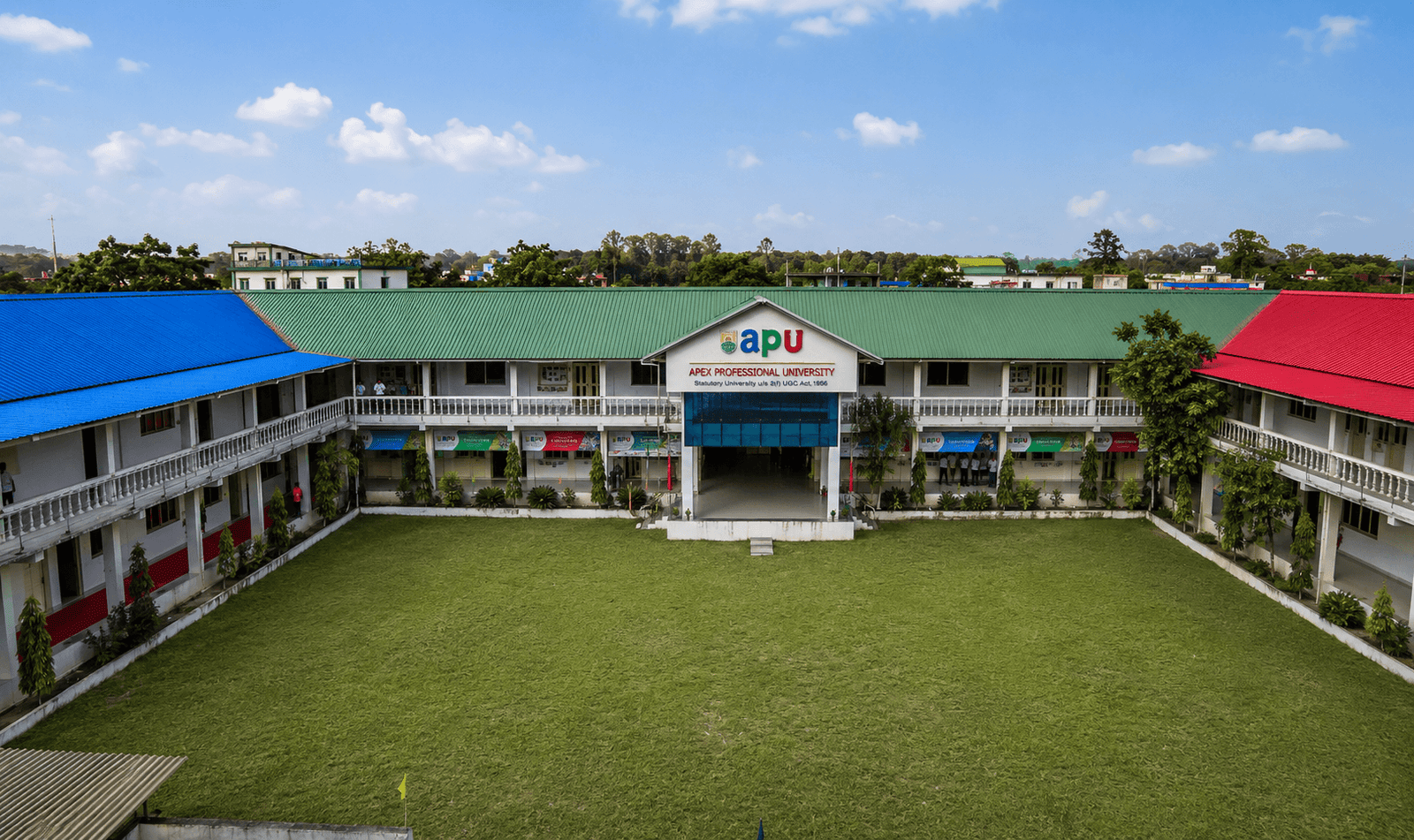
APU offers postgraduate psychology within its sciences faculties, alongside applied and clinical-oriented streams, and runs a dedicated Centre for Environment Psychology. For most students the appeal is the familiar APU combination: a UGC-recognised degree, a campus reachable from across Upper Assam and the Northeast, and fees far gentler than big metro universities.

But APU has one edge very few psychology departments in India can match — Indian psychology. As a pioneer in blending the Indian Knowledge System with modern academics, APU treats Indian psychological traditions — the study of mind, consciousness and wellbeing drawn from Indian thought and yogic science — as a serious field, not a footnote. For a student who wants psychology with that dimension, it is a genuinely rare offering.


Frequently Asked Questions (FAQ)

Which is better for a career, MA or M.Sc Psychology?

Neither is universally better — they emphasise different things. MA Psychology leans towards theory, counselling and applied work; M.Sc Psychology leans towards experimental, statistical and clinical-scientific training. Choose based on your intended specialisation and career, not on a perceived hierarchy between the two degrees.

Can I become a clinical psychologist with an MA or M.Sc in Psychology?

Not on its own. Clinical psychology practice in India is regulated by the Rehabilitation Council of India, and requires an RCI-recognised qualification. A general MA or M.Sc is valuable for counselling, organisational, research and applied careers, but if clinical practice is your goal, plan the RCI-approved route from the start.

What can I do after a Masters in Psychology?

You can work in counselling, organisational and HR roles, research, education, community and health settings, or continue to a PhD and academia. With the appropriate RCI-recognised route you can pursue clinical practice. Your specialisation during the master’s largely shapes which of these opens up.

What is the eligibility for a Masters in Psychology?

You generally need a bachelor’s degree, with a psychology background preferred and sometimes required for M.Sc or clinical streams. Minimum aggregate marks vary by university. Some colleges admit on merit; others use an entrance test or interview. Confirm the exact criteria with each college.

Does Apex Professional University offer Indian psychology?

Yes. Alongside mainstream psychology, APU is one of the few Indian universities that treats Indian psychology — the study of mind and consciousness drawn from Indian knowledge traditions and yogic science — as a serious academic field, reflecting its pioneering work in the Indian Knowledge System.

Share on:
B.Pharm vs D.Pharm: Which Pharmacy Course Should You Choose?
Indian Psychology: What It Means, Its Scope, and Where to Study It

Start Your Journey at APU

APU in Your City
Apply Online
Download Prospectus
Apex Professional University

Apex Professional University
NH-515, Pasighat Smart City
Arunachal Pradesh – 791102
(20 Miles from Jonai, Assam)

Call: +91 8800 838 839
Email: ask@apexuniversity.edu.in

Icon-facebook Icon-linkedin2 Icon-instagram Icon-twitter Icon-youtube

Enter your email address to register to our newsletter subscription

Public Disclosure

  • UGC Public Self Disclosure
  • APU Act & Statutes
  • Academic Regulations
  • Recognition & Approvals
  • Student Grievance Cell
  • APU Service Rules
  • APU Ombudsperson
  • Facilities & Infrastructure
  • List of Holidays
  • Feedback Forms
  • Photo Gallery
  • Admission Offices
  • Connect with us

Information Centre

  • Student Welfare Office
  • Circulars & Notices
  • Download Prospectus
  • Academic Calendar
  • Online Fee Payment
  • Examination Rules
  • Examination Form
  • Examination Result
  • Fellowship & Scholarship
  • Placement Cell
  • Detailed Syllabus
  • Hostel
  • Fee Structure

Important Links

  • e-Samadhaan
  • UGC Website
  • APPEIRC Website
  • MoE Website
  • Downloads
  • Ancient Indian Scriptures
  • Academic Bank of Credits
  • DigiLocker
  • National Scholarship Portal
  • Job Openings
  • APU Employee Portal
  • SWAYAM Courses
  • Shodhganga
Copyright 2026 Apex Professional University | All Rights Reserved

Public Notice : It is hereby notified for the information of all concerned that Apex Professional University, duly approved and recognised by UGC, Ministry of Education, Government of India, to award degrees through main campus at Pasighat, Arunachal Pradesh. The university does not have any branch campuses, study centres, or affiliated institutions within or outside India. Any claim to the contrary shall be treated as false and misleading.

Further, the University does not offer online or distance programs. All students required to attend minimum 80% classes in person at the main campus except private students. The University does not accept any fee in cash under any circumstances. All payments must be made through the official University fee payment system.

The University may designate certain Admission Centres exclusively for the limited purpose of referring eligible students for admission to the University. Admission Centres are not authorized to confirm admissions, conduct classes, or hold examinations.

The University shall not be responsible or liable for any loss arising from dealings with unauthorized persons or entities falsely claiming association with the University.

Any such incidents should be reported immediately at: info@apexuniversity.edu.in

Apex Professional University