



Table of Contents
TogglePharmacy Colleges in Assam: A Clear Guide to PCI-Approved B.Pharm & D.Pharm Options
Pharmacy is one of the most reliable career bets in healthcare — every hospital, pharma company and medical store needs trained pharmacists. But there is a catch that decides everything else: to register and practise as a pharmacist in India, you must hold a degree from a college approved by the Pharmacy Council of India (PCI). So before you compare anything, confirm PCI approval. That is rule one.
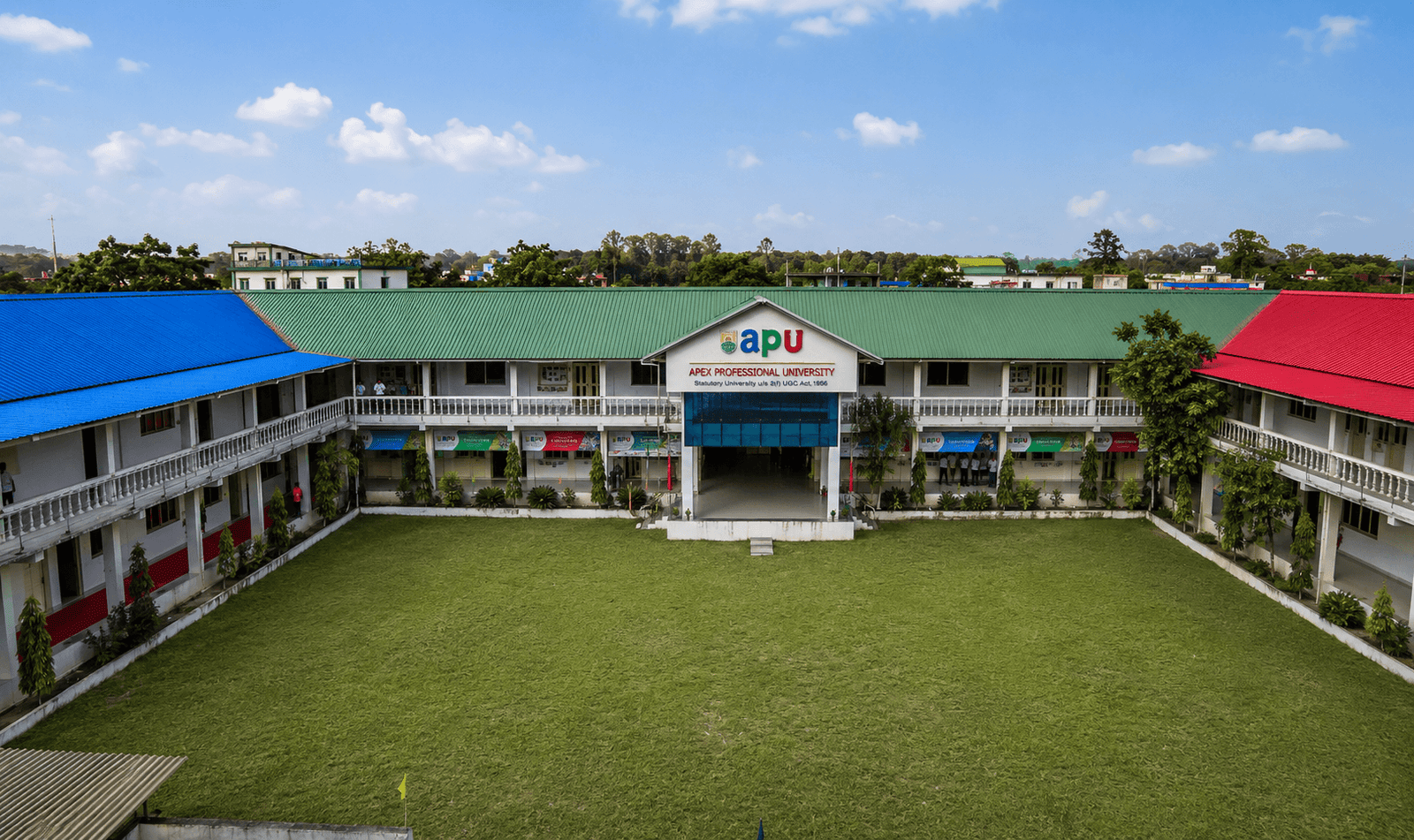
For students across Assam looking at the “best pharma colleges in Assam”, it is worth knowing that PCI-approved pharmacy programmes at Apex Professional University (APU) sit just over the Assam border in Pasighat — close enough for many Upper Assam students, and recognised nationwide. Here is the full picture.
B.Pharm vs D.Pharm: which one fits you?
The two entry routes into pharmacy confuse a lot of students. The difference is simple once you see it side by side.
| D.Pharm (Diploma) | B.Pharm (Degree) |
Duration | 2 years | 4 years |
Entry after | Class 12 (PCB/PCM) | Class 12 (PCB/PCM) |
Leads to | Registered Pharmacist; run/work in a pharmacy | Wider roles: industry, QA/QC, hospital, research, govt |
Next step | Can later upgrade to B.Pharm | Can pursue M.Pharm / Pharm.D |
In short: D.Pharm is the faster, more affordable route to becoming a registered pharmacist; B.Pharm opens more doors — pharmaceutical industry, hospital pharmacy, drug regulation, research — and is the better long-term bet if you can commit four years. If you are searching for “D.Pharmacy colleges in Arunachal Pradesh” specifically, APU’s Pasighat campus is one to look at.
Why PCI approval is the only place to start
The Pharmacy Council of India is the statutory regulator for pharmacy education and practice. Only graduates of PCI-approved institutions can register with a State Pharmacy Council — and registration is what legally lets you dispense medicines. A non-approved course can leave you unable to register, whatever the certificate says.
So treat “PCI approved colleges” as a filter, not a bonus. Check the PCI’s approved-institutions list for any college you shortlist.
Career scope after pharmacy
Part of why pharmacy keeps attracting students is the sheer range of where it can lead:
- Community & hospital pharmacy — dispensing, patient counselling, ward pharmacy.
- Pharmaceutical industry — production, quality assurance and quality control, formulation.
- Drug regulatory affairs and government drug-inspector roles.
- Medical writing, clinical research and pharmacovigilance.
- Entrepreneurship — your own licensed pharmacy or distribution business.
- Higher study — M.Pharm, Pharm.D, or research.
Pharmacy at APU for Assam & Northeast students
APU’s pharmacy programmes run under PCI norms, with the labs and practical training the council requires. For a student in Dhemaji or Lakhimpur, the appeal is the same as for law: a recognised, regulator-approved qualification without relocating to a far-off metro, and at fees that are usually far lower than big private pharmacy colleges.
As always — compare honestly. Look at PCI approval, lab facilities, total course cost and internship support across every college on your list, then decide.
Frequently Asked Questions (FAQ)
Are APU’s pharmacy courses PCI approved?
Yes. Apex Professional University runs its pharmacy programmes under Pharmacy Council of India norms, which is the approval that lets graduates register with a State Pharmacy Council and practise. Always verify current PCI approval on the official PCI list before you enrol anywhere.
What is the difference between B.Pharm and D.Pharm?
D.Pharm is a two-year diploma that qualifies you as a registered pharmacist. B.Pharm is a four-year degree that opens wider roles in industry, hospitals, research and regulation, and leads on to M.Pharm or Pharm.D. D.Pharm is faster; B.Pharm offers more long-term scope.
Can students from Assam do their B.Pharm at APU?
Yes. APU’s Pasighat campus is roughly 17 miles from the Assam border, so many pharmacy students come from Upper Assam. The PCI-recognised qualification is valid across India, so your home state does not limit where you can register or work afterwards.
What can I do after a pharmacy course?
You can work in community or hospital pharmacy, the pharmaceutical industry (production, QA/QC, formulation), drug regulation, clinical research and pharmacovigilance, or start your own licensed pharmacy. Many graduates also pursue higher study through M.Pharm or Pharm.D.