



Table of Contents
ToggleTop B.Ed College in Assam: NCTE-Approved Options & the New 2026 Rules Explained
If you want to teach, the B.Ed is your licence — and 2026 is a confusing year to be choosing one, because the rules are mid-change. So this guide does two jobs: it explains the one thing every B.Ed must have (NCTE approval), and it untangles the new one-year-versus-two-year question that is tripping up applicants right now.
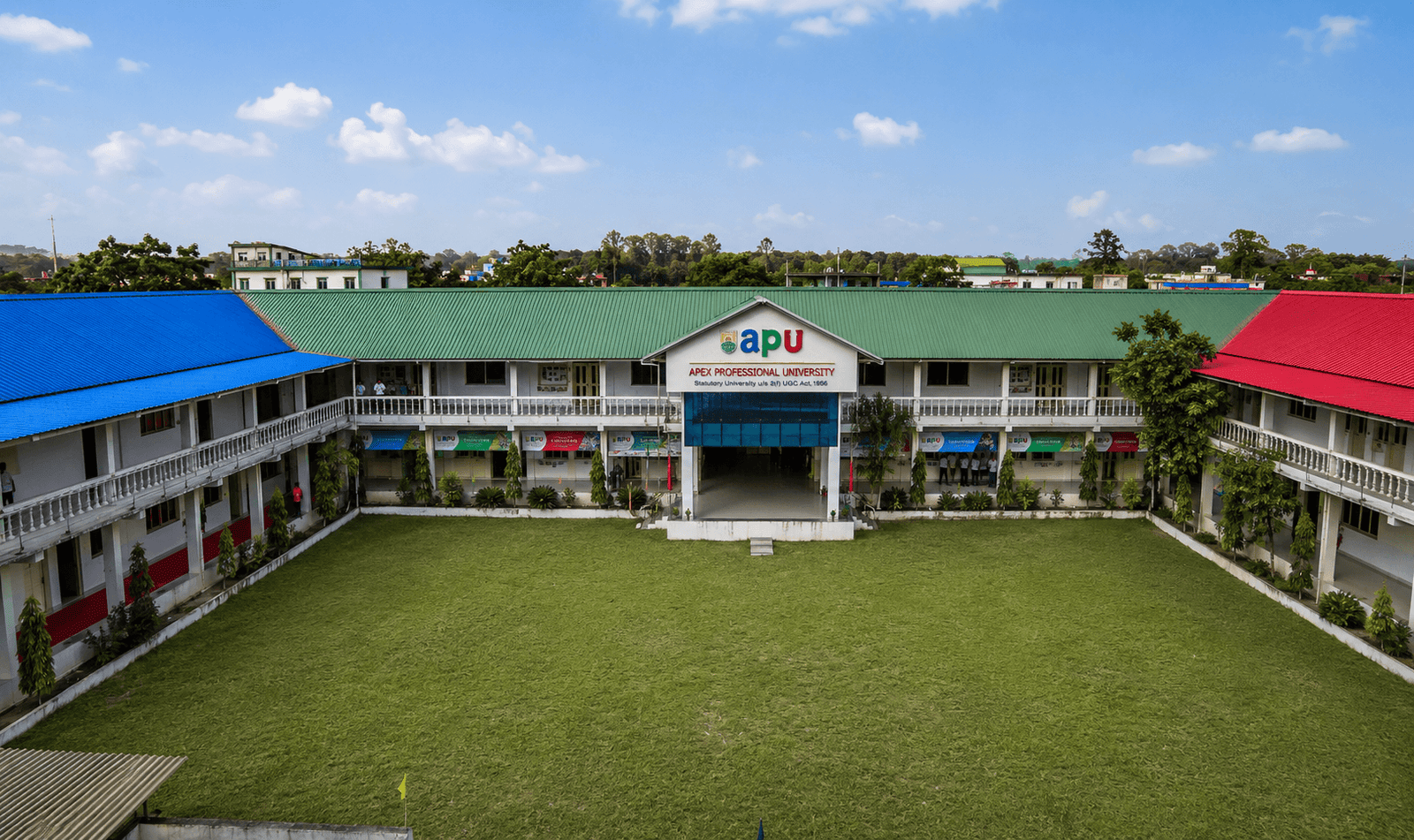
For Assam students, NCTE-approved B.Ed and M.Ed programmes at Apex Professional University (APU) in Pasighat are within easy reach across the border — a point we will come back to. First, the part everyone is asking about.
The 2026 change: one-year B.Ed is back (for some)
Here is the clear version, because there is a lot of noise online. The National Council for Teacher Education has decided to bring back the one-year B.Ed (and one-year M.Ed) from the 2026-27 session, reversing the 2014 rule that made two years mandatory. It is not a free-for-all, though.
Route | Who it is for |
One-year B.Ed (new) | Candidates who already hold a four-year undergraduate degree or a postgraduate degree (meeting the minimum marks NCTE prescribes) |
Two-year B.Ed (continues) | Candidates with a standard three-year bachelor’s degree |
4-year ITEP (integrated) | Students entering straight after Class 12 who want teaching + a degree together |
So the rumour that “all B.Ed becomes one year in 2026” is simply false. If you did a normal three-year degree, your route is still the two-year B.Ed. The one-year option is a faster track for people who already have a four-year or postgraduate qualification. Final operational details are still being rolled out by NCTE for the 2026-27 cycle, so confirm the current status when you apply.
Why NCTE approval is the only thing that makes a B.Ed count
A B.Ed is only valid for teaching jobs — government schools, TET/CTET eligibility, most private schools — if the programme is NCTE-recognised. A non-approved “B.Ed” can leave you ineligible for the very exams and jobs you trained for. So check NCTE approval first, every time.
What you study, and what it leads to
A B.Ed blends education theory — child psychology, pedagogy, assessment, inclusive education — with real teaching practice in schools. Done properly, you finish able to actually run a classroom, not just describe one. After it, the paths include:
- Government and private school teaching (with TET/CTET as applicable).
- Subject-specialist teaching at secondary and senior-secondary level.
- Educational administration, curriculum and content roles.
- Higher study — M.Ed, and onward to teacher-educator and research roles.
B.Ed for Assam students at APU
APU runs NCTE-approved teacher-education programmes, and its Pasighat campus is close enough to the Assam border to be a practical choice for aspiring teachers from Upper Assam. The pull is the same as for the university’s other professional courses — recognised qualification, reachable location, sensible fees.
As with every course on your shortlist, judge a B.Ed college on NCTE approval, the quality and length of its teaching-practice arrangements, and faculty strength — then decide.
Frequently Asked Questions (FAQ)
Is B.Ed becoming a one-year course in 2026?
Not for everyone. NCTE is reintroducing a one-year B.Ed from 2026-27, but only for candidates who already hold a four-year undergraduate degree or a postgraduate degree. Students with a standard three-year bachelor’s degree continue with the two-year B.Ed. Always confirm the current NCTE norms when applying.
What does NCTE approval mean for a B.Ed college?
NCTE approval means the programme is recognised by the National Council for Teacher Education, the statutory regulator for teacher education in India. Only an NCTE-recognised B.Ed makes you eligible for teaching jobs and for exams such as TET and CTET. Always verify approval before enrolling.
Can students from Assam do their B.Ed at APU?
Yes. APU’s Pasighat campus is close to the Assam border, so many education students come from Upper Assam. Its B.Ed is NCTE-approved, so the qualification is valid for teaching jobs and teacher-eligibility tests across India, regardless of your home state.
What can I do after a B.Ed?
After a B.Ed you can teach in government and private schools (with TET/CTET where required), specialise by subject at secondary level, move into educational administration or curriculum work, or continue to an M.Ed and on to teacher-educator and research roles.