



Skip to content
Apex Professional University
  • Know us
    • About Us
    • Administration
      • Founder & Chancellor
      • Vice Chancellor
      • University Officers
      • Board of Governors
      • Board of Management
      • Academic Senate
      • Board of Studies
      • Finance Committee
      • Ombudsperson
    • Act & Statute
    • Institutional Development Plan
    • Recognition & Approval
    • Accreditation & Ranking
    • Annual Report
    • Annual Accounts
    • Sponsoring Body
  • Academics

      Academic Programs

      • Certificate & Diploma
      • Bachelor Degree
      • Master Degree
      • Ph.D. Program
      • Post Doctoral Fellowship
      • Apprenticeship Embedded Degrees
      • External (Private) Degree

      Faculty

      • Faculty of Education and Liberal Studies
      • Faculty of Law and Forensic Sciences
      • Faculty of Pharmaceutical and Biomedical Science
      • Faculty of Nursing & Patient Care
      • Faculty of Naturopathy & Yogic Science
      • Faculty of Management & Technology
      • Centre for Indian Knowledge System
      • Centre for Vocational Education
      • Institute of Research & Innovations
      • Directorate of Outreach
      • Apex Institute of Medical Sciences & Hospital

      Useful Links

      • Academic Calendar
      • Academic Regulations
      • Academic Leadership
      • Examination Rules
      • Faculty Profile
      • IQAC
      • Library
      • Academic Collaborations
  • Admission
    • Prospectus
    • Why Study at APU
    • Admission Process
    • Scholarship Scheme
    • Fee Refund Policy
    • Admission Offices
    • Pay Your Fees
    • International Students
    • Apply Now
    • Fee Structure
  • Research
    • R & D Cell
      • Saturday Exchange: Ideas & Innovation
    • Incubation & Entrepreneurship Centre
    • Research Facilities
    • List of Guide
    • List of Scholars
    • Our Journals
      • BKS Journal
    • Research Centres
  • Student Life
    • Campus Life
    • NCC
    • Sports Facilities
    • Hostel Facilities
    • Health Facilities
    • Placement Cell
    • Student Grievance Cell
    • Internal Complaints Committee
    • Anti-Ragging Cell
    • Equal Opportunity Cell
    • Facilities for Differently-abled
    • Alumni Association
    • SEDG Cell
    • UGC e-Samadhan Portal
  • Resources
    • E-Content
    • Right To Information (RTI)
    • Circulars & Notices
    • Announcements
    • Newsletters
    • Blog
    • News & Events
    • Job Openings
    • Study in India
    • Admission Procedure
    • Photo Gallery
    • Telephone Directory
Apply Now
Apex Professional University
  • Know us
    • About Us
    • Administration
      • Founder & Chancellor
      • Vice Chancellor
      • University Officers
      • Board of Governors
      • Board of Management
      • Academic Senate
      • Board of Studies
      • Finance Committee
      • Ombudsperson
    • Act & Statute
    • Institutional Development Plan
    • Recognition & Approval
    • Accreditation & Ranking
    • Annual Report
    • Annual Accounts
    • Sponsoring Body
  • Academics

      Academic Programs

      • Certificate & Diploma
      • Bachelor Degree
      • Master Degree
      • Ph.D. Program
      • Post Doctoral Fellowship
      • Apprenticeship Embedded Degrees
      • External (Private) Degree

      Faculty

      • Faculty of Education and Liberal Studies
      • Faculty of Law and Forensic Sciences
      • Faculty of Pharmaceutical and Biomedical Science
      • Faculty of Nursing & Patient Care
      • Faculty of Naturopathy & Yogic Science
      • Faculty of Management & Technology
      • Centre for Indian Knowledge System
      • Centre for Vocational Education
      • Institute of Research & Innovations
      • Directorate of Outreach
      • Apex Institute of Medical Sciences & Hospital

      Useful Links

      • Academic Calendar
      • Academic Regulations
      • Academic Leadership
      • Examination Rules
      • Faculty Profile
      • IQAC
      • Library
      • Academic Collaborations
  • Admission
    • Prospectus
    • Why Study at APU
    • Admission Process
    • Scholarship Scheme
    • Fee Refund Policy
    • Admission Offices
    • Pay Your Fees
    • International Students
    • Apply Now
    • Fee Structure
  • Research
    • R & D Cell
      • Saturday Exchange: Ideas & Innovation
    • Incubation & Entrepreneurship Centre
    • Research Facilities
    • List of Guide
    • List of Scholars
    • Our Journals
      • BKS Journal
    • Research Centres
  • Student Life
    • Campus Life
    • NCC
    • Sports Facilities
    • Hostel Facilities
    • Health Facilities
    • Placement Cell
    • Student Grievance Cell
    • Internal Complaints Committee
    • Anti-Ragging Cell
    • Equal Opportunity Cell
    • Facilities for Differently-abled
    • Alumni Association
    • SEDG Cell
    • UGC e-Samadhan Portal
  • Resources
    • E-Content
    • Right To Information (RTI)
    • Circulars & Notices
    • Announcements
    • Newsletters
    • Blog
    • News & Events
    • Job Openings
    • Study in India
    • Admission Procedure
    • Photo Gallery
    • Telephone Directory

D.Pharmacy in Arunachal Pradesh

  • Home
  • Achievements
  • D.Pharmacy in Arunachal Pradesh
Breadcrumb Abstract Shape
Achievements

D.Pharmacy in Arunachal Pradesh

  • August 9, 2026
  • Com 0

Table of Contents

Toggle
  • D.Pharmacy in Arunachal Pradesh: The Two-Year Route to Registered Pharmacist
  • What D.Pharm actually is
  • Why the registration matters more than the certificate
  • Eligibility
  • Studying D.Pharm in Arunachal Pradesh
  • The PCI check — do this before you pay anything
  • What D.Pharm graduates actually do
  • Salary — the realistic picture
  • D.Pharm or B.Pharm?
  • Frequently asked questions
        • What is the eligibility for D.Pharm?
        • How long is the D.Pharm course?
        • Are there D.Pharmacy colleges in Arunachal Pradesh?
        • Can I open a medical store after D.Pharm?
        • Is D.Pharm better than B.Pharm?
        • What is the salary after D.Pharm?
        • Is D.Pharm a good career option?
  • If you are deciding now

D.Pharmacy in Arunachal Pradesh: The Two-Year Route to Registered Pharmacist

The Diploma in Pharmacy is a two-year programme after class 12 that qualifies you to register with a State Pharmacy Council and work as a pharmacist. It is the shortest legal route into a licensed healthcare profession in India, and it is the qualification that lets you dispense medicines in a hospital or open your own retail pharmacy.

If you want to be working and earning by twenty, this is the degree worth understanding properly.

What D.Pharm actually is

Two years of full-time study plus a period of practical training, regulated by the Pharmacy Council of India under the Education Regulations for the diploma course. The syllabus covers pharmaceutics, pharmaceutical chemistry, pharmacology, pharmacognosy, hospital and clinical pharmacy, and pharmacy law and ethics.

The practical training component is the part people underestimate. It is not a formality — it is where you learn to read a prescription properly, and it is what employers ask about.

On completing it, you apply to the State Pharmacy Council where you intend to practise and register as a Registered Pharmacist. That registration, not the diploma certificate, is what makes the work legal.

Why the registration matters more than the certificate

Under the Pharmacy Act, dispensing medicines is restricted to registered pharmacists. A retail pharmacy licence requires a registered pharmacist on the premises. Hospital pharmacy posts require it. Government pharmacist posts require it.

This is the practical value of the qualification and it is worth stating clearly: a D.Pharm is a licence, not just a certificate. That is why a two-year diploma has employment value that many three-year degrees do not.

Eligibility

You need class 12 with Physics and Chemistry, plus either Biology or Mathematics, from a recognised board. Some institutions specify a minimum aggregate — commonly around 45–50% — and this varies.

Minimum age is typically seventeen at admission.

Both PCB and PCM students qualify, which is worth knowing because many students assume pharmacy is closed to them if they took mathematics.

Studying D.Pharm in Arunachal Pradesh

Arunachal Pradesh has a small number of pharmacy institutions, which cuts both ways. Fewer options, but also less competition for seats and, for students from the state, no need to leave home or navigate a new state’s admission system.

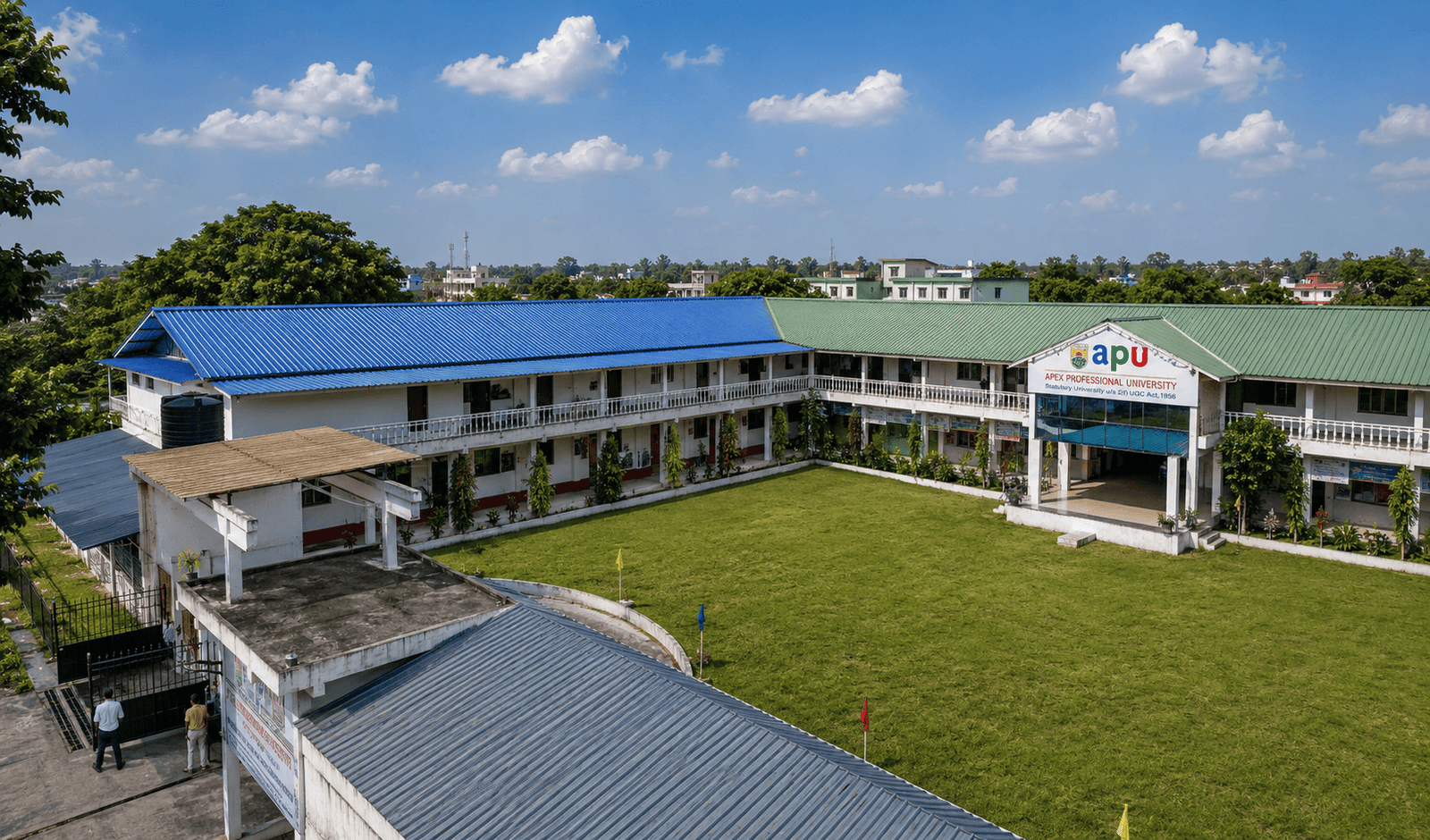
Apex Professional University in Pasighat offers [INSERT: D.Pharm and/or B.Pharm — VERIFY] with [INSERT sanctioned intake — VERIFY]. Admission is [INSERT process — VERIFY].

Students from Upper Assam — Dibrugarh, Tinsukia, Sivasagar — often find Pasighat closer than pharmacy colleges in Guwahati. If you are in Lower or Central Assam, see [Pharmacy Colleges in Assam → existing post 14] instead.

The PCI check — do this before you pay anything

The Pharmacy Council of India maintains a list of approved institutions. Your college must appear on it, for the current academic year, for the specific course.

If it does not, the State Pharmacy Council will refuse your registration when you finish. You will have spent two years and the fees for a certificate that does not permit you to work as a pharmacist. This happens, and it is entirely avoidable.

Ask the institution for:

  • Its current PCI approval letter, showing the academic year
  • The sanctioned annual intake
  • The name of the State Pharmacy Council its graduates register with

An institution that provides all three within a day is one you can trust with two years of your life. See [How to check a UGC approved university → Post 2] for the full verification process.

What D.Pharm graduates actually do

Retail and community pharmacy. The most common route. You can work in an existing pharmacy or, with registration and a drug licence, open your own. In the Northeast, where pharmacy density outside the main towns is low, this is a genuine small-business opportunity.

Hospital pharmacy. Government and private hospitals employ pharmacists for dispensing, inventory and ward supply. Government posts often go through state recruitment boards and are among the more secure options.

Government pharmacist posts. State health departments, ESIC, railways, defence and central health services recruit pharmacists, and D.Pharm with registration is usually the minimum qualification. Watch the Arunachal Pradesh and Assam state recruitment notifications.

Pharmaceutical marketing and distribution. Medical representative and distribution roles. Higher earning ceiling, more travel, target-driven.

Or continue to B.Pharm. Lateral entry into the second year of B.Pharm is available at many institutions, which means D.Pharm plus two more years gives you a degree. This is a genuinely good route for students who want to start earning quickly but keep the door open.

Salary — the realistic picture

Starting salaries for a fresh D.Pharm graduate in a retail or hospital pharmacy in the Northeast are modest — [VERIFY range] a month is a reasonable expectation, and higher in metros. Government posts pay according to the relevant pay scale and come with the associated security.

The earning shifts meaningfully when you own the pharmacy rather than work in one, and when you move into distribution or pharmaceutical sales.

Be careful with the salary figures published on education websites. They are frequently inflated. Ask a working pharmacist in your town.

D.Pharm or B.Pharm?

Short version: D.Pharm is two years and gets you registered and working. B.Pharm is four years, opens industry, research, clinical and regulatory roles, and is required for Pharm.D or M.Pharm.

We have compared them properly in [B.Pharm vs D.Pharm → existing post 8], and covered where a B.Pharm leads in [Careers After B.Pharm → existing post 3].

Frequently asked questions

What is the eligibility for D.Pharm?

Class 12 with Physics and Chemistry plus either Biology or Mathematics, from a recognised board. Most institutions require a minimum aggregate of around 45 to 50 percent, and the minimum age is generally seventeen. Both PCB and PCM students are eligible.

How long is the D.Pharm course?

Two years of full-time study, followed by a period of practical training in a hospital or retail pharmacy before you can register. After registration with a State Pharmacy Council you can practise as a Registered Pharmacist.

Are there D.Pharmacy colleges in Arunachal Pradesh?

Yes, though the number is small. Apex Professional University in Pasighat offers pharmacy programmes, and students from Upper Assam often find it more accessible than Guwahati. Confirm current PCI approval and sanctioned intake with any institution before applying.

Can I open a medical store after D.Pharm?

Yes. After completing D.Pharm and registering with a State Pharmacy Council as a Registered Pharmacist, you can apply for a retail drug licence from your state drug control authority. Requirements include suitable premises, storage conditions and the pharmacist’s registration certificate.

Is D.Pharm better than B.Pharm?

Neither is better in general; they lead to different places. D.Pharm takes two years and qualifies you to register and dispense. B.Pharm takes four and opens industry, clinical, regulatory and research roles plus postgraduate study. Lateral entry lets you convert D.Pharm into B.Pharm with two additional years.

What is the salary after D.Pharm?

Fresh graduates in retail or hospital pharmacy in the Northeast typically start modestly, with government pharmacist posts paying according to the applicable pay scale. Earnings rise significantly with pharmacy ownership, distribution, or a move into pharmaceutical sales. Treat published salary figures on college sites with caution.

Is D.Pharm a good career option?

It suits students who want a licensed healthcare qualification quickly and at low cost. It is one of the few two-year programmes in India that ends in a statutory professional registration. It is less suitable if your goal is pharmaceutical research or industry, where B.Pharm is the entry point.

If you are deciding now

Check the PCI list for every college you are considering. Then spend an hour in a busy pharmacy watching what the pharmacist actually does. If that looks like work you would be content doing at twenty-five, this is a good decision.

Share on:
LL.M After LL.B
Nursing Courses in Assam After 12th

Start Your Journey at APU

APU in Your City
Apply Online
Download Prospectus
Apex Professional University

Apex Professional University
NH-515, Pasighat Smart City
Arunachal Pradesh – 791102
(20 Miles from Jonai, Assam)

Call: +91 8800 838 839
Email: ask@apexuniversity.edu.in

Icon-facebook Icon-linkedin2 Icon-instagram Icon-twitter Icon-youtube

Enter your email address to register to our newsletter subscription

Public Disclosure

  • UGC Public Self Disclosure
  • APU Act & Statutes
  • Academic Regulations
  • Recognition & Approvals
  • Student Grievance Cell
  • APU Service Rules
  • APU Ombudsperson
  • Facilities & Infrastructure
  • List of Holidays
  • Feedback Forms
  • Photo Gallery
  • Admission Offices
  • Connect with us

Information Centre

  • Student Welfare Office
  • Circulars & Notices
  • Download Prospectus
  • Academic Calendar
  • Online Fee Payment
  • Examination Rules
  • Examination Form
  • Examination Result
  • Fellowship & Scholarship
  • Placement Cell
  • Detailed Syllabus
  • Hostel
  • Fee Structure

Important Links

  • e-Samadhaann
  • UGC Website
  • APPEIRC Website
  • MoE Website
  • APU Blogs
  • Downloads
  • Ancient Indian Scriptures
  • Academic Bank of Credits
  • DigiLocker
  • National Scholarship Portal
  • Job Openings
  • APU Employee Portal
  • SWAYAM Courses
  • Shodhganga
Copyright 2026 Apex Professional University | All Rights Reserved

Public Notice : It is hereby notified for the information of all concerned that Apex Professional University, duly approved and recognised by UGC, Ministry of Education, Government of India, to award degrees through main campus at Pasighat, Arunachal Pradesh. The university does not have any branch campuses, study centres, or affiliated institutions within or outside India. Any claim to the contrary shall be treated as false and misleading.

Further, the University does not offer online or distance programs. All students required to attend minimum 80% classes in person at the main campus except private students. The University does not accept any fee in cash under any circumstances. All payments must be made through the official University fee payment system.

The University may designate certain Admission Centres exclusively for the limited purpose of referring eligible students for admission to the University. Admission Centres are not authorized to confirm admissions, conduct classes, or hold examinations.

The University shall not be responsible or liable for any loss arising from dealings with unauthorized persons or entities falsely claiming association with the University.

Any such incidents should be reported immediately at: info@apexuniversity.edu.in

Apex Professional University