



Skip to content
Apex Professional University
  • Know us
    • About Us
    • Administration
      • Founder & Chancellor
      • Vice Chancellor
      • University Officers
      • Board of Governors
      • Board of Management
      • Academic Senate
      • Board of Studies
      • Finance Committee
      • Ombudsperson
    • Act & Statute
    • Institutional Development Plan
    • Recognition & Approval
    • Accreditation & Ranking
    • Annual Report
    • Annual Accounts
    • Sponsoring Body
  • Academics

      Academic Programs

      • Certificate & Diploma
      • Bachelor Degree
      • Master Degree
      • Ph.D. Program
      • Post Doctoral Fellowship
      • Apprenticeship Embedded Degrees
      • External (Private) Degree

      Faculty

      • Faculty of Education and Liberal Studies
      • Faculty of Law and Forensic Sciences
      • Faculty of Pharmaceutical and Biomedical Science
      • Faculty of Nursing & Patient Care
      • Faculty of Naturopathy & Yogic Science
      • Faculty of Management & Technology
      • Centre for Indian Knowledge System
      • Centre for Vocational Education
      • Institute of Research & Innovations
      • Directorate of Outreach
      • Apex Institute of Medical Sciences & Hospital

      Useful Links

      • Academic Calendar
      • Academic Regulations
      • Academic Leadership
      • Examination Rules
      • Faculty Profile
      • IQAC
      • Library
      • Academic Collaborations
  • Admission
    • Prospectus
    • Why Study at APU
    • Admission Process
    • Scholarship Scheme
    • Fee Refund Policy
    • Admission Offices
    • Pay Your Fees
    • International Students
    • Apply Now
    • Fee Structure
  • Research
    • R & D Cell
      • Saturday Exchange: Ideas & Innovation
    • Incubation & Entrepreneurship Centre
    • Research Facilities
    • List of Guide
    • List of Scholars
    • Our Journals
      • BKS Journal
    • Research Centres
  • Student Life
    • Campus Life
    • NCC
    • Sports Facilities
    • Hostel Facilities
    • Health Facilities
    • Placement Cell
    • Student Grievance Cell
    • Internal Complaints Committee
    • Anti-Ragging Cell
    • Equal Opportunity Cell
    • Facilities for Differently-abled
    • Alumni Association
    • SEDG Cell
    • UGC e-Samadhan Portal
  • Resources
    • E-Content
    • Right To Information (RTI)
    • Circulars & Notices
    • Announcements
    • Newsletters
    • Blog
    • News & Events
    • Job Openings
    • Study in India
    • Admission Procedure
    • Photo Gallery
    • Telephone Directory
Apply Now
Apex Professional University
  • Know us
    • About Us
    • Administration
      • Founder & Chancellor
      • Vice Chancellor
      • University Officers
      • Board of Governors
      • Board of Management
      • Academic Senate
      • Board of Studies
      • Finance Committee
      • Ombudsperson
    • Act & Statute
    • Institutional Development Plan
    • Recognition & Approval
    • Accreditation & Ranking
    • Annual Report
    • Annual Accounts
    • Sponsoring Body
  • Academics

      Academic Programs

      • Certificate & Diploma
      • Bachelor Degree
      • Master Degree
      • Ph.D. Program
      • Post Doctoral Fellowship
      • Apprenticeship Embedded Degrees
      • External (Private) Degree

      Faculty

      • Faculty of Education and Liberal Studies
      • Faculty of Law and Forensic Sciences
      • Faculty of Pharmaceutical and Biomedical Science
      • Faculty of Nursing & Patient Care
      • Faculty of Naturopathy & Yogic Science
      • Faculty of Management & Technology
      • Centre for Indian Knowledge System
      • Centre for Vocational Education
      • Institute of Research & Innovations
      • Directorate of Outreach
      • Apex Institute of Medical Sciences & Hospital

      Useful Links

      • Academic Calendar
      • Academic Regulations
      • Academic Leadership
      • Examination Rules
      • Faculty Profile
      • IQAC
      • Library
      • Academic Collaborations
  • Admission
    • Prospectus
    • Why Study at APU
    • Admission Process
    • Scholarship Scheme
    • Fee Refund Policy
    • Admission Offices
    • Pay Your Fees
    • International Students
    • Apply Now
    • Fee Structure
  • Research
    • R & D Cell
      • Saturday Exchange: Ideas & Innovation
    • Incubation & Entrepreneurship Centre
    • Research Facilities
    • List of Guide
    • List of Scholars
    • Our Journals
      • BKS Journal
    • Research Centres
  • Student Life
    • Campus Life
    • NCC
    • Sports Facilities
    • Hostel Facilities
    • Health Facilities
    • Placement Cell
    • Student Grievance Cell
    • Internal Complaints Committee
    • Anti-Ragging Cell
    • Equal Opportunity Cell
    • Facilities for Differently-abled
    • Alumni Association
    • SEDG Cell
    • UGC e-Samadhan Portal
  • Resources
    • E-Content
    • Right To Information (RTI)
    • Circulars & Notices
    • Announcements
    • Newsletters
    • Blog
    • News & Events
    • Job Openings
    • Study in India
    • Admission Procedure
    • Photo Gallery
    • Telephone Directory

LL.M After LL.B

  • Home
  • Achievements
  • LL.M After LL.B
Breadcrumb Abstract Shape
Achievements

LL.M After LL.B

  • August 9, 2026
  • Com 0

Table of Contents

Toggle
  • LL.M After LL.B: Is It Worth Two More Years?
  • What an LL.M actually gets you
  • What it does not get you
  • One year or two
  • Choosing a specialisation
    • Corporate and commercial law
    • Constitutional and administrative law
    • Criminal law
    • Intellectual property law
    • International law and human rights
    • Environmental, energy and technology law
  • Eligibility and entrance
  • Where to study, including in Arunachal Pradesh
  • Can you do an LL.M while practising?
  • Frequently asked questions
        • Is LL.M worth it after LL.B?
        • How many years is an LL.M in India?
        • What is the eligibility for LL.M?
        • Can I do LL.M in Arunachal Pradesh?
        • Is LL.M required for judicial services?
        • Can I teach law with an LL.M?
  • How to decide

LL.M After LL.B: Is It Worth Two More Years?

An LL.M is a postgraduate law degree, one or two years after an LL.B, in a chosen specialisation such as constitutional law, corporate law, criminal law or international law. It is required for teaching law, useful for research and policy work, and genuinely valuable in a few specialised practice areas.

For most people who want to litigate, it is not necessary. That is not the answer most college websites give you, but it is the one worth having before you commit two years.

What an LL.M actually gets you

It is effectively mandatory for a career in legal academia. If you want to teach law in India, you need an LL.M and usually UGC-NET or a PhD alongside it. There is no route around this.

It opens research and policy work. Think tanks, law commissions, legislative drafting, judicial research assistantships, international organisations. These roles read your LL.M subject and your dissertation.

It signals genuine specialisation in a few areas. Intellectual property, international trade, environmental law, tax, maritime law. In these fields an LL.M from a strong programme changes which conversations you get invited into.

It gives you a second chance at your CV. A three-year LL.B graduate from a lesser-known college who does an LL.M at a strong institution meaningfully changes their trajectory. This is the most underrated reason to do one.

What it does not get you

An LL.M does not make you a better litigator. Courtroom skill comes from being in courtrooms.

It does not automatically raise your starting salary at a law firm. Firms recruit on the LL.B, the internships and the interview.

And it does not fix an uncertain relationship with the profession. Two more years of law school will not make you want to be a lawyer if you do not already.

One year or two

India has both. The two-year LL.M is the traditional format and remains the more widely offered. The UGC and BCI have both permitted one-year LL.M programmes, offered by a set of institutions including several NLUs.

For an academic career, check the current UGC norms on whether a one-year LL.M satisfies the eligibility conditions for assistant professor posts and for PhD admission at your target institution — this has been a moving target and you should confirm it directly rather than trusting a forum post.

For practice or industry, one year is efficient and perfectly respectable.

Choosing a specialisation

Choose for the work you want, not the fee difference.

Corporate and commercial law

Company law, mergers and acquisitions, securities, banking. Feeds into law firm practice and in-house counsel roles. The largest demand, and the most competition.

Constitutional and administrative law

The foundation for academia, judicial services preparation, public interest litigation and policy work. The most intellectually demanding option and the one that most improves your writing.

Criminal law

Deepens what you will actually use in trial practice, and pairs well with judicial services preparation.

Intellectual property law

Patents, trademarks, copyright, designs. One of the few areas where the LL.M genuinely changes your employability, particularly if your first degree was in science or engineering.

International law and human rights

For international organisations, NGOs, cross-border practice and academia. Be realistic about the number of positions available in India.

Environmental, energy and technology law

Newer, smaller, and growing fastest. Environmental law in particular is expanding in India through NGT practice and corporate compliance work.

Eligibility and entrance

You need an LL.B — three-year or five-year integrated — from a BCI-recognised institution, with the minimum aggregate set by the university, commonly 50% for general category and 45% for reserved categories.

CLAT PG is the entrance for the National Law Universities and is accepted by several other institutions. It is held alongside CLAT UG in December.

AILET PG is for NLU Delhi. CUET PG covers a number of central universities. Most state and private universities run their own entrance tests or admit on merit.

Where to study, including in Arunachal Pradesh

LL.M seats are concentrated in the NLUs, the central and state universities, and a growing number of private universities.

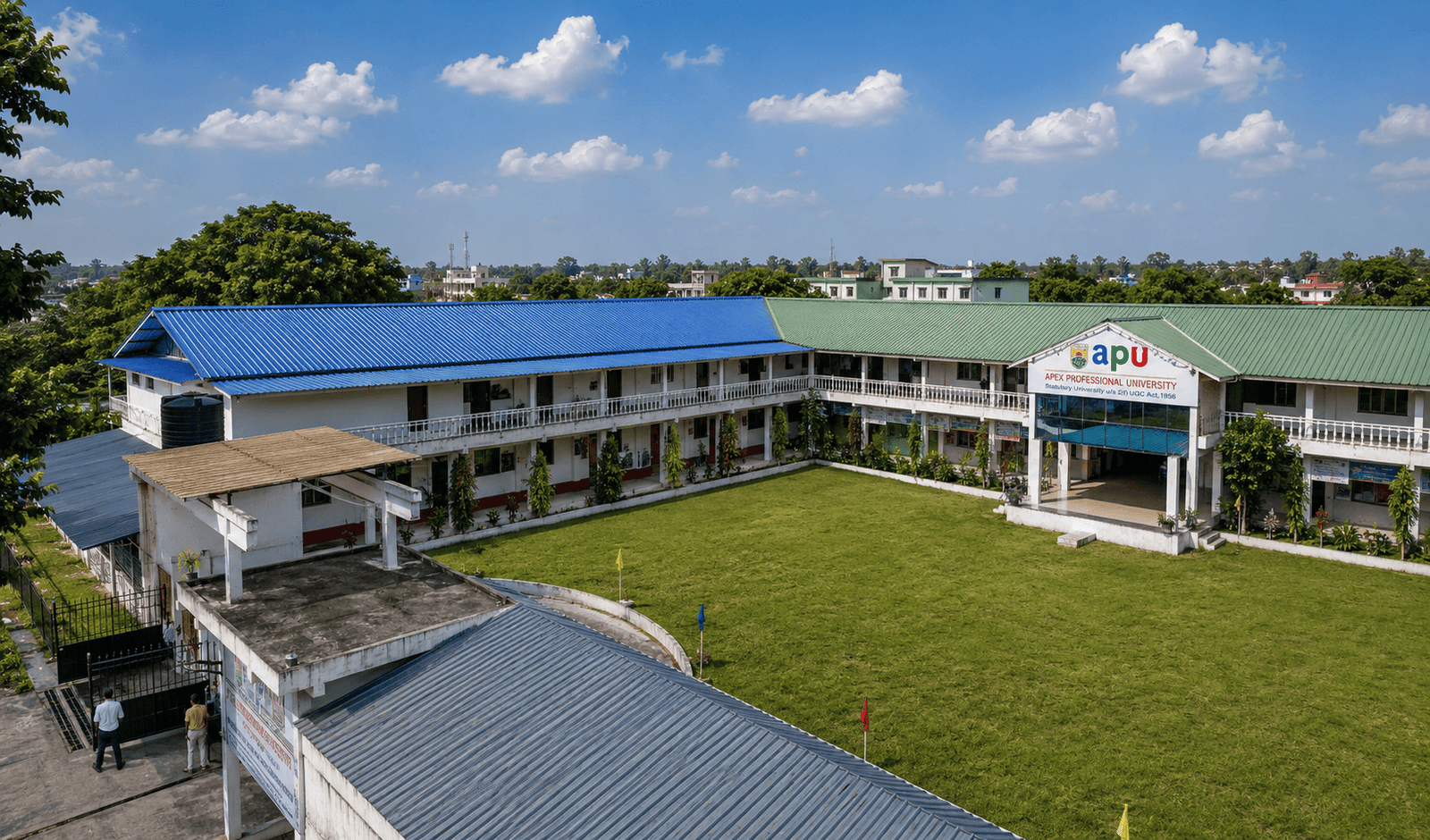
In Arunachal Pradesh, options are limited but they exist — including the LL.M programme at Apex Professional University in Pasighat, which offers [INSERT specialisations — VERIFY]. For advocates already practising in Arunachal or Upper Assam, a local LL.M is often the only realistic way to take the degree without leaving practice, and that practicality matters more than a ranking table.

The same verification rule applies as for any law programme: confirm current BCI and UGC status before you enrol. See [How to check a UGC approved university → Post 2].

Rajiv Gandhi University in Doimukh is the state’s central university and worth checking for its current law offerings. 

Can you do an LL.M while practising?

Many advocates do, and a few universities structure their LL.M with this in mind. The honest constraint is attendance — BCI and UGC norms require it, and a programme that promises you need not attend is one to be suspicious of.

If you are two to four years into practice, this is often the best time to do an LL.M. You know which area you want, you know what you do not know, and you will get far more out of the coursework than you would have at twenty-three.

Frequently asked questions

Is LL.M worth it after LL.B?

It is worth it for academia, research, policy work and a few specialised practice areas such as intellectual property, tax and environmental law, where it is close to essential. For general litigation practice it adds little that courtroom experience would not. Decide by the career you want, not by default.

How many years is an LL.M in India?

Either one year or two, depending on the institution. The two-year format is the traditional and more widely available option. One-year LL.M programmes are offered by several National Law Universities and others. Confirm which format your target institution offers and whether it meets your career requirements.

What is the eligibility for LL.M?

An LL.B from a BCI-recognised institution, three-year or five-year integrated, with the minimum aggregate set by the university — commonly 50% for general and 45% for reserved categories. There is no work experience requirement and no upper age limit.

Can I do LL.M in Arunachal Pradesh?

Yes. LL.M programmes are available in Arunachal Pradesh, including at Apex Professional University in Pasighat. Options are fewer than in larger states, so confirm current BCI approval, the specialisations offered and the mode of delivery directly with the institution before applying.

Is LL.M required for judicial services?

No. State judicial service examinations require an LL.B and enrolment or eligibility for enrolment as an advocate, not an LL.M. Some candidates find that LL.M coursework in constitutional and criminal law strengthens their preparation, but it is not an eligibility condition.

Can I teach law with an LL.M?

An LL.M is the minimum qualification for teaching law, usually alongside UGC-NET or a PhD depending on the institution and the post. Requirements differ between universities and change with UGC regulations, so check the current norms for the specific institution you are targeting.

How to decide

Write down the job you want in five years. If the people doing that job hold an LL.M, do one. If they do not, spend those two years in the work instead.

Share on:
LLB Course in Assam
D.Pharmacy in Arunachal Pradesh

Start Your Journey at APU

APU in Your City
Apply Online
Download Prospectus
Apex Professional University

Apex Professional University
NH-515, Pasighat Smart City
Arunachal Pradesh – 791102
(20 Miles from Jonai, Assam)

Call: +91 8800 838 839
Email: ask@apexuniversity.edu.in

Icon-facebook Icon-linkedin2 Icon-instagram Icon-twitter Icon-youtube

Enter your email address to register to our newsletter subscription

Public Disclosure

  • UGC Public Self Disclosure
  • APU Act & Statutes
  • Academic Regulations
  • Recognition & Approvals
  • Student Grievance Cell
  • APU Service Rules
  • APU Ombudsperson
  • Facilities & Infrastructure
  • List of Holidays
  • Feedback Forms
  • Photo Gallery
  • Admission Offices
  • Connect with us

Information Centre

  • Student Welfare Office
  • Circulars & Notices
  • Download Prospectus
  • Academic Calendar
  • Online Fee Payment
  • Examination Rules
  • Examination Form
  • Examination Result
  • Fellowship & Scholarship
  • Placement Cell
  • Detailed Syllabus
  • Hostel
  • Fee Structure

Important Links

  • e-Samadhaann
  • UGC Website
  • APPEIRC Website
  • MoE Website
  • APU Blogs
  • Downloads
  • Ancient Indian Scriptures
  • Academic Bank of Credits
  • DigiLocker
  • National Scholarship Portal
  • Job Openings
  • APU Employee Portal
  • SWAYAM Courses
  • Shodhganga
Copyright 2026 Apex Professional University | All Rights Reserved

Public Notice : It is hereby notified for the information of all concerned that Apex Professional University, duly approved and recognised by UGC, Ministry of Education, Government of India, to award degrees through main campus at Pasighat, Arunachal Pradesh. The university does not have any branch campuses, study centres, or affiliated institutions within or outside India. Any claim to the contrary shall be treated as false and misleading.

Further, the University does not offer online or distance programs. All students required to attend minimum 80% classes in person at the main campus except private students. The University does not accept any fee in cash under any circumstances. All payments must be made through the official University fee payment system.

The University may designate certain Admission Centres exclusively for the limited purpose of referring eligible students for admission to the University. Admission Centres are not authorized to confirm admissions, conduct classes, or hold examinations.

The University shall not be responsible or liable for any loss arising from dealings with unauthorized persons or entities falsely claiming association with the University.

Any such incidents should be reported immediately at: info@apexuniversity.edu.in

Apex Professional University