



Table of Contents
ToggleLLB Course in Assam 2026: Eligibility, Entrance, Fees and What the Degree Actually Costs You
An LL.B in Assam takes either five years straight after class 12, or three years after any bachelor’s degree. Both routes end at the same place: a Bar Council of India-recognised law degree that lets you enrol as an advocate. The five-year route saves you two years. The three-year route gives you a second qualification and two more years to be sure.
Which one suits you depends less on ambition and more on how certain you are right now. Here is everything else you need before you apply.
Three-year or five-year: choose this first
Everything else follows from this decision.
The five-year integrated route
Straight after class 12. You graduate with two degrees — BA LL.B, BBA LL.B, B.Com LL.B or BSc LL.B depending on the stream — and you are twenty-three when you finish.
Take it if you are genuinely sure about law. Five years of legal study from eighteen builds a depth of familiarity that three-year students spend their careers catching up on. Corporate law firms recruiting on campus lean towards five-year graduates, partly for the age and partly because the good five-year programmes have stronger internship pipelines.
The three-year route
After any bachelor’s degree. You are twenty-three or twenty-four when you start and twenty-six or twenty-seven when you finish.
Take it if you are not sure, or if you want a subject alongside law. A commerce graduate doing three-year LL.B is unusually well placed for tax and company practice. An engineering graduate is well placed for IP. And a twenty-three-year-old choosing law has usually chosen it properly, which shows.
The honest comparison
Five-year integrated | Three-year LL.B | |
Entry | After class 12 | After graduation |
Total time from class 12 | 5 years | 6 years (3 + 3) |
Age at completion | ~23 | ~26 |
Degrees held | Two (BA/BBA/B.Com + LL.B) | Two, in different fields |
Corporate firm recruitment | Generally stronger | Possible, needs more effort |
Litigation, judiciary, government | No disadvantage | No disadvantage |
Best for | Certainty, corporate ambitions | Career switchers, subject specialists |
Eligibility
For the five-year programme, you need class 12 from a recognised board. BCI norms set a minimum aggregate — commonly 45% for general category, 40% for SC/ST, though individual institutions set higher bars. There is no stream restriction: science, commerce and arts students all qualify.
For the three-year programme, you need a bachelor’s degree in any discipline, with a similar minimum aggregate.
There is no upper age limit. The BCI attempted to impose one and the Supreme Court set it aside, so career changers in their thirties and forties are admitted routinely.
Entrance exams that matter in Assam
CLAT
The Common Law Admission Test, for the National Law Universities. In Assam that means the National Law University and Judicial Academy in Guwahati. Held in December for the following academic year. Registration opens around August. This is the most competitive route and worth attempting if your class 12 preparation allows.
University-level entrance tests
Gauhati University, Dibrugarh University and Assam University, Silchar admit to their law programmes through their own processes, and several private universities run their own tests or admit on merit. Each publishes its schedule independently, which means you need a spreadsheet and a set of calendar reminders.
CUET
Some universities accept CUET scores for law programmes. Check each institution’s admission notification for the current cycle rather than assuming.
AILET and others
AILET is for NLU Delhi. LSAT-India is accepted by a set of private institutions. Both are worth adding if you are already preparing for CLAT, since the syllabus overlaps heavily.
Where you can study law in Assam
The National Law University and Judicial Academy, Assam, in Guwahati, is the state’s NLU and the most competitive entry. Gauhati University’s law faculty and the colleges affiliated to it form the largest single group of law seats in the state. Dibrugarh University serves Upper Assam, and Assam University, Silchar serves the Barak Valley. Several state private universities in Guwahati — including Assam Down Town University and Royal Global University — run five-year integrated programmes.
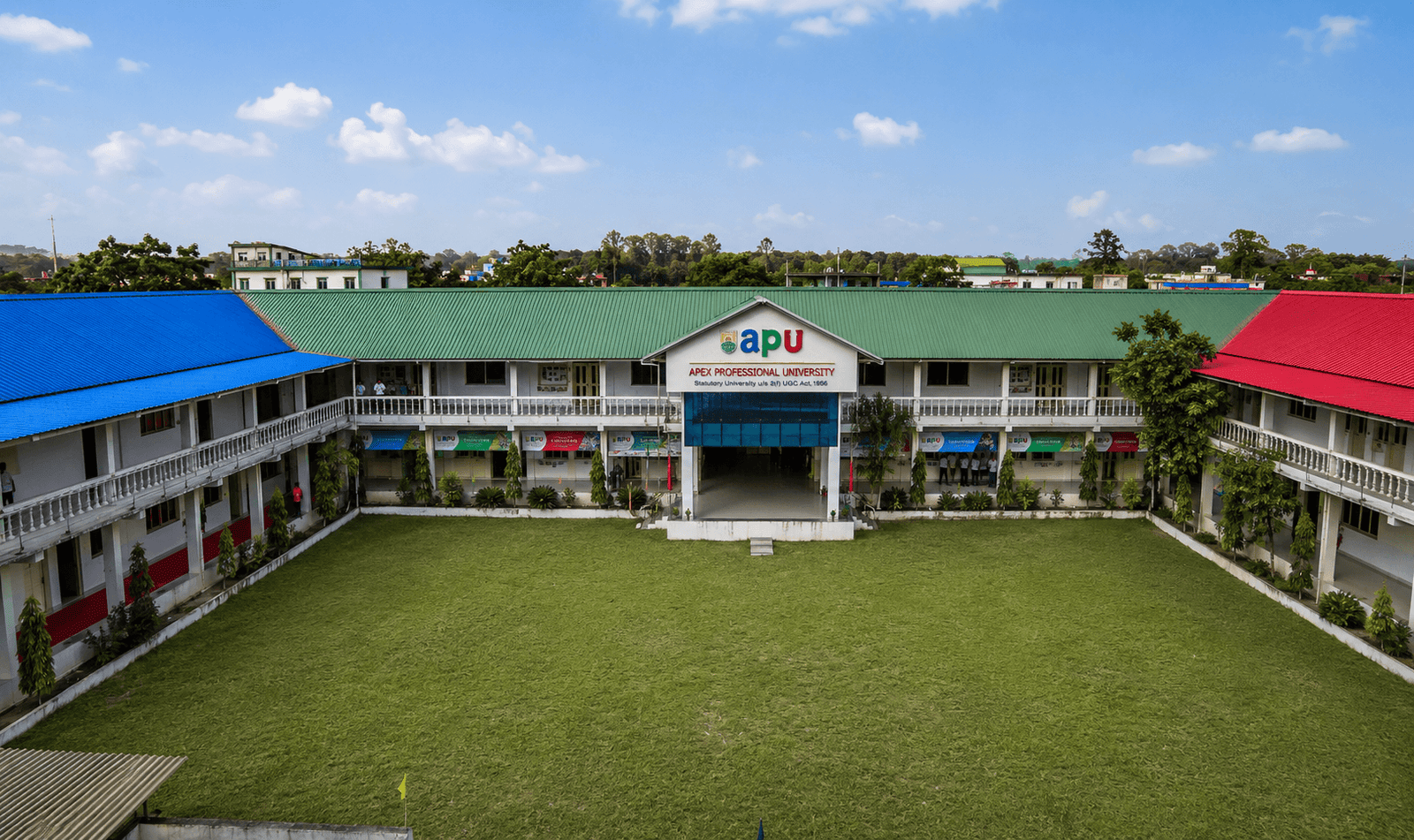
If you are in Upper Assam, campuses in Arunachal Pradesh are also within reach, including the LL.B programme at Apex Professional University in Pasighat. We have covered those separately in [Law Colleges in Arunachal Pradesh → existing post 15].
The BCI check you must not skip
A law degree that BCI has not approved will not let you enrol with a State Bar Council, which means you cannot practise. The degree is otherwise worthless for legal careers.
Go to the Bar Council of India website, find the list of approved institutions, and locate your college — for the current academic year. Approvals are granted for fixed periods and colleges do lose them. Ask the college directly for its current BCI approval letter and the sanctioned intake. If they are slow to produce it, that is your answer.
The full verification method, including the other regulators, is in [How to check a UGC approved university → Post 2].
Fees, and the costs that are not fees
Government and state university law programmes in Assam are inexpensive — often [VERIFY range] per year. Private universities charge considerably more, typically [VERIFY range] per year for a five-year integrated programme.
Then there is everything else. Bare Acts and textbooks each semester. Moot court travel, which you should absolutely do and which nobody budgets for. Internship expenses in Guwahati or Delhi, mostly unpaid in the first years. And after the degree, the All India Bar Examination fee and enrolment fees with the State Bar Council.
Budget an extra [VERIFY] a year beyond tuition and hostel. It will not be far off.
What happens after the degree
Litigation, the judiciary, corporate law firms, in-house legal teams, public sector legal roles, the state and central judicial services, legal journalism, policy work, compliance. Litigation in Assam means starting under a senior at a modest stipend for the first two or three years — that is the reality of the profession everywhere in India, and it is why the graduates who last are the ones who planned for it.
We have written about this in detail in [Careers After LL.B → existing post 2].
One thing worth saying plainly: the first three years after an LL.B are financially thin for almost everyone who goes into litigation. If that is your path, plan for it now rather than discovering it at twenty-six.
Frequently asked questions
What is the eligibility for LLB in Assam?
For the five-year integrated LL.B you need class 12 from a recognised board with the minimum aggregate set by BCI and the institution — commonly 45% general and 40% SC/ST. For the three-year LL.B you need a bachelor’s degree in any subject with a similar minimum. There is no upper age limit.
How many years is LLB in Assam?
Three years if you already hold a bachelor’s degree, five years if you enter directly after class 12. The five-year route awards an integrated degree such as BA LL.B or B.Com LL.B. Both are recognised by the Bar Council of India for enrolment as an advocate.
Which entrance exam is needed for LLB in Assam?
CLAT is required for the National Law University and Judicial Academy, Assam. Other universities conduct their own entrance tests or admit on merit, and some accept CUET scores. Check each institution’s admission notification, since the accepted exams differ and change between years.
Is LLB from a private university in Assam valid?
Yes, provided the programme holds current Bar Council of India approval and the university is UGC-recognised. BCI approval is what allows you to enrol with a State Bar Council and practise. Verify it on the BCI website for the current academic year before applying.
Can I do LLB after B.Sc or B.Com?
Yes. The three-year LL.B accepts graduates from any discipline. Commerce graduates often move naturally into tax, company and corporate practice, and science or engineering graduates into intellectual property. Your first degree becomes a specialisation advantage rather than a detour.
What is the fee for LLB in Assam?
State university programmes are among the least expensive professional degrees in Assam, while private universities charge substantially more. [VERIFY both ranges.] Beyond tuition, budget for textbooks, Bare Acts each semester, moot court travel, largely unpaid internships, and the AIBE and enrolment fees after graduation.
What is the fee for LLDo I need to clear AIBE after LLB?B in Assam?
Yes, if you intend to practise. The All India Bar Examination is conducted by the Bar Council of India, and passing it earns the Certificate of Practice. You can enrol with a State Bar Council after graduation and appear for AIBE subsequently, within the prescribed period.
If you are deciding this month
Register for CLAT if you are in class 12 and law is your first choice. Sit in on a district court hearing for an afternoon — it is free, it is open, and it tells you more about the profession than any brochure. Then verify BCI approval for every college on your list.